
Well this was a whirlwind of a session. As you may have read the budget carried on for an additional two months leaving about a week for the post-budget policy season.
There are 10 budget bills each year - 5 are the dollars and cents or appropriation bills and 5 are purely policy or article VII bills. Because the New York State Constitution and court decisions give the Governor significant power in the budget process (see previous newsletter), the budget is where the Governor advances her policy priorities.
Over the next few weeks I will share highlights of what is in the final budget followed by some policy highlights that passed this year. The Transportation, Economic Development and Environmental Conservation (TED) article VII budget bill, Part VV, contains the amendment language to the CLCPA. Below I’ve written a complete article dedicated to explaining what the climate law is, what each of the individual amendments are, what they mean, and why they matter.
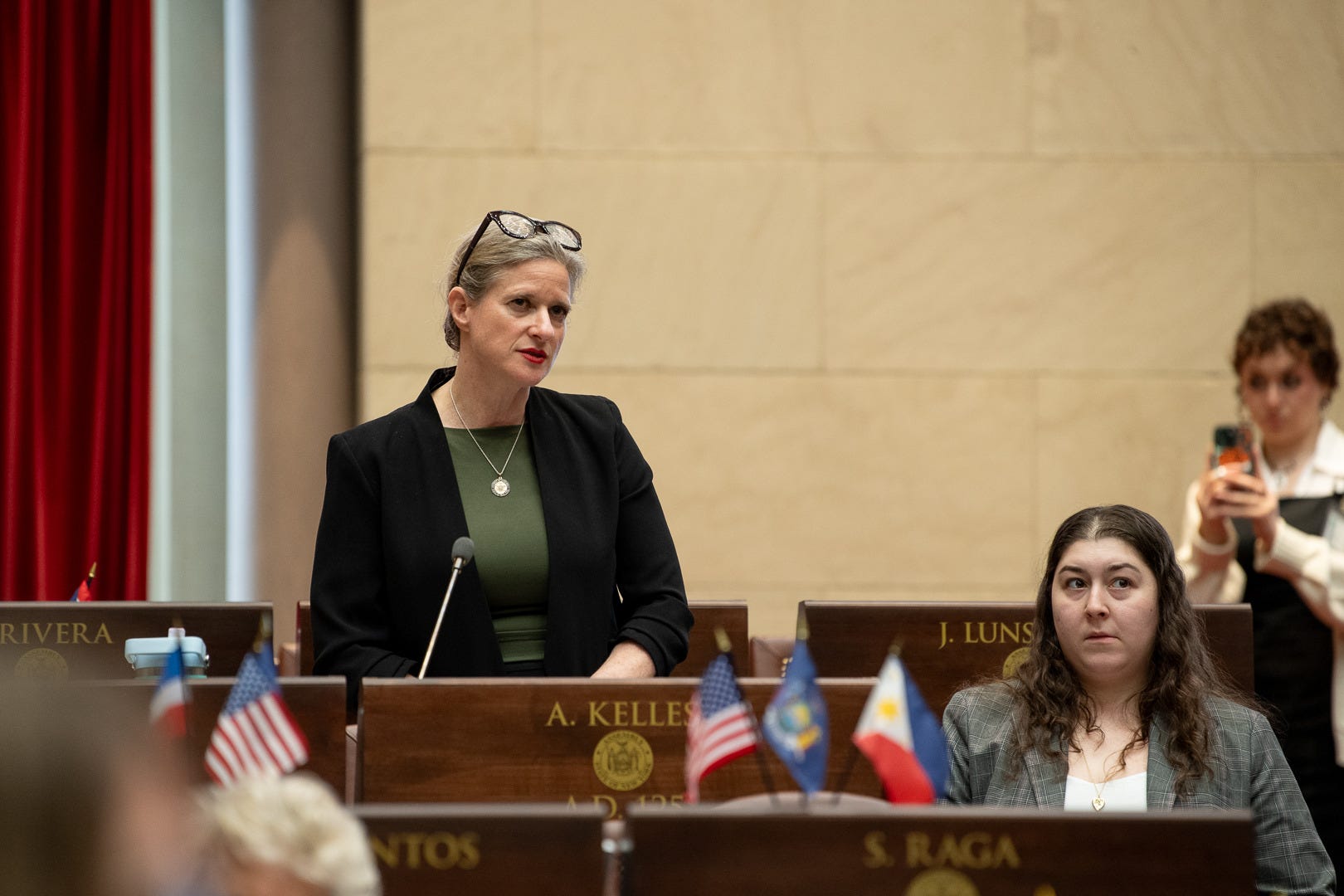
This was the only budget bill this year that I could not support with my vote because of the climate rollbacks that were included. You can watch my speech on the Assembly chamber floor explaining my vote here.

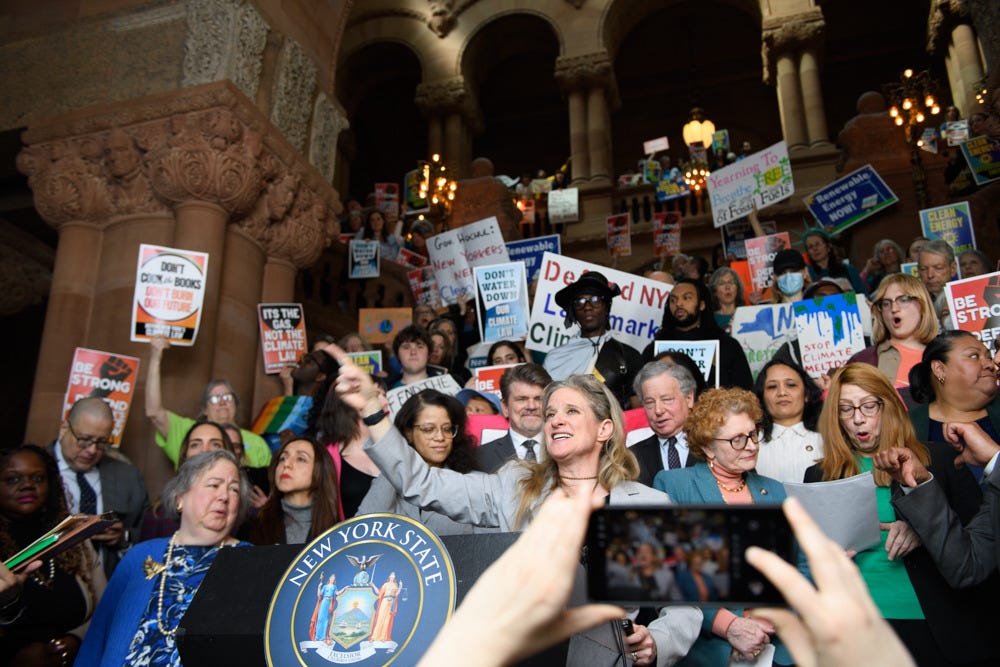
Why The CLCPA Was Enacted
The Climate Leadership and Community Protection Act (CLCPA: ENV law 75, Pub Service law 66p) is New York’s climate law, enacted in 2019. The law established legally binding statewide greenhouse gas reduction requirements, including reducing emissions 40% below 1990 levels by 2030 and at least 85% below 1990 levels by 2050. Lawmakers enacted the law to align state policy with the of emissions reductions scientists determined were necessary to reduce climate risks. Specifically, it was intended to position New York as part of the broader international effort reflected in the Paris Agreement to limit global warming and avoid the most severe consequences of climate change. Below are the changes to the climate law enacted in this year’s budget.
Changes to How New York Measures Greenhouse Gas Emissions
Not all greenhouse gases behave the same way in the atmosphere. Carbon dioxide is the most common greenhouse gas produced by human activities and can remain in the atmosphere for hundreds to thousands of years. In contrast, methane, the second most significant human-caused greenhouse gas, remains in the atmosphere for a much shorter period, roughly a decade, but traps far more heat while it is there.
Because different greenhouse gases have different warming effects and remain in the atmosphere for different lengths of time, their climate impacts cannot be directly compared. Scientists therefore convert them into a common measurement called “carbon dioxide equivalents.” It is a way of directly comparing the relative warming impact of different greenhouse gases.
To calculate carbon dioxide equivalents, we must choose a timeframe over which these warming effects will be compared. The chosen timeframe determines how much weight is given to these different warming patterns when comparing one gas to another.
When the CLCPA was enacted in 2019, New York chose to measure greenhouse gases using a 20-year timeframe to better capture methane’s contribution to warming, which occurs largely during the first few decades after release. This climate law amendment changes that framework from a 20-year timeframe to a 100-year timeframe. A 100-year averaging period does not change the fact that methane causes most of its warming during the first few decades after it is released. What it does is average that intense early warming across many additional decades when methane is no longer having much effect because it has broken down.
Because methane has largely broken down long before the end of a 100-year period, its contribution appears smaller relative to carbon dioxide even though the warming it caused during the earlier decades remains unchanged. As a result, methane will account for a smaller share of the emissions inventory used to evaluate compliance with the CLCPA.
This change is particularly significant because methane is closely tied to major emissions sources, including natural gas production, transmission, and distribution, as well as landfills and agriculture. Landfill methane is produced when food scraps, paper, yard waste, and other organic materials decompose in the low-oxygen conditions found inside landfills. Agricultural methane comes primarily from livestock and manure management. As a result, emissions from these sources will carry less weight when measuring compliance with New York’s climate goals, reducing the apparent climate benefit of cutting methane pollution from these sectors.
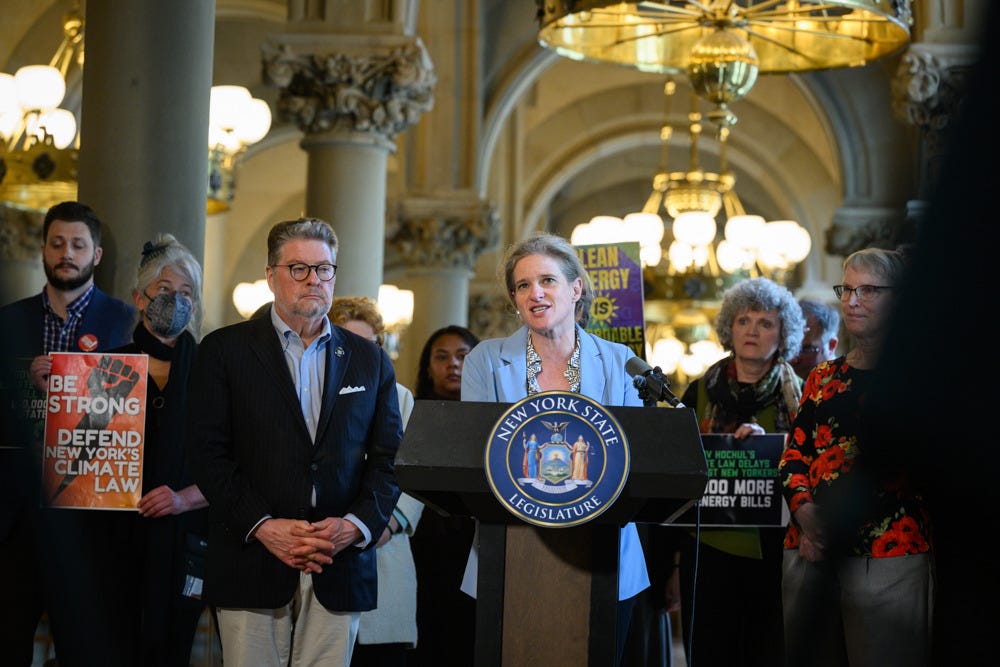
Changes to New York’s Greenhouse Gas Inventory
Under the original CLCPA, statewide greenhouse gas emissions included upstream emissions associated with the extraction and transportation of fossil fuels into New York. This amendment removes these upstream emissions from the statewide greenhouse gas inventory. The original law included these emissions because they would not have occurred without demand for fossil fuels in New York. The language does, however, continue to count emissions associated with imported electricity.
This change in fossil fuel emissions accounting does not eliminate these emissions. It simply removes them from the inventory used to measure progress toward New York’s climate goals.
The bill also changes how biogenic carbon dioxide emissions are treated. These are carbon dioxide emissions associated with biological materials such as wood, crops, and organic waste, including emissions released when these materials are burned or decompose.
According to the language of this amendment, the State will continue to measure and report these emissions, but they will no longer be included in the statewide greenhouse gas total used to measure compliance with the CLCPA. These emissions do not disappear. They simply will no longer be recognized when measuring progress toward our climate goals.
Changes to Climate Planning
Under the CLCPA, the Climate Action Council (CAC) was tasked with creating the State’s climate roadmap, known as the Scoping Plan. The Scoping Plan outlines how New York intends to achieve its climate goals and guides future policy decisions across sectors such as energy, transportation, buildings, industry, and agriculture.
The original law required the Scoping Plan to be updated at least every five years. This amendment changes this schedule. The next update is now due in 2028 and future updates will occur every six years.
This climate law amendment also changes the factors that must be considered when updating the State’s climate roadmap. The original CLCPA focused primarily on identifying pathways to achieve the greenhouse gas reductions required by law. Under this amendment, future planning must place greater emphasis on considerations such as affordability, reliability, energy security, technological feasibility, and economic impacts. As a result, future climate recommendations may place greater priority on these considerations, even when doing so results in slower, smaller, or modified emissions reductions.
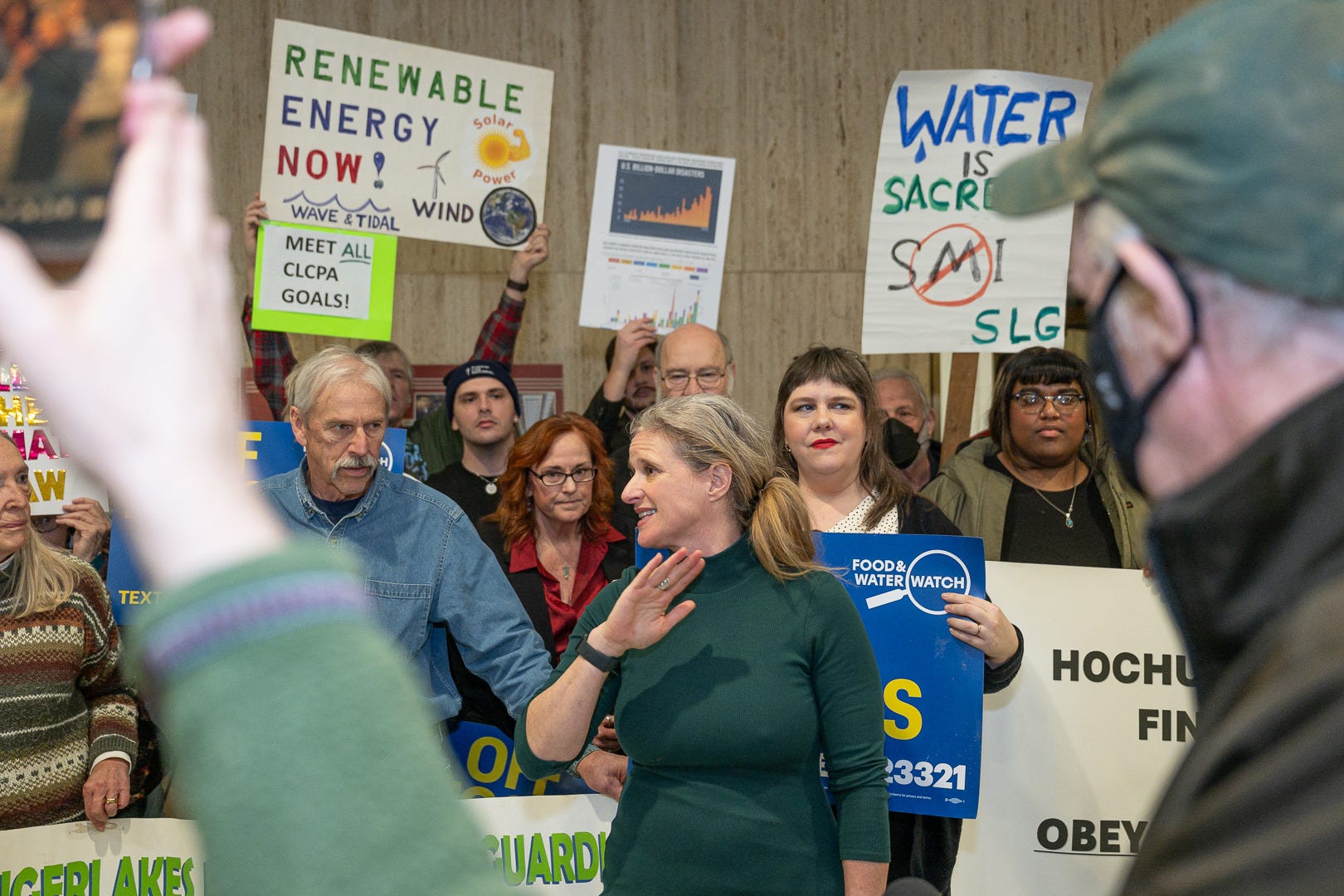
Changes to Regulatory Requirements
The original climate law established clear greenhouse gas reduction requirements of 40% below 1990 levels by 2030 and 85% below 1990 levels by 2050. This amendment changes the regulatory requirements for the Department of Environmental Conservation (DEC) so that the first emissions-reduction benchmark in the regulatory section is 2040, not 2030. It also requires that the 2040 target, a 60% reduction below 1990 levels, be pursued only to the “maximum extent feasible and cost effective”.
This is a significant change because the original 2030 emissions-reduction benchmark is removed from the regulatory requirements altogether and replaced with a 2040 benchmark that must be pursued only to the maximum extent feasible and cost effective. The legislation also gives greater weight to considerations such as affordability, reliability, technological feasibility, and cost when determining both what emissions reductions should be pursued and how quickly they should occur. If, for example, the DEC concludes that a particular emissions-reduction measure risks reliability or would increase costs, the agency has a stronger basis for modifying, delaying, or declining to pursue that measure.
Many environmental organizations consider this one of the most consequential provisions in this year’s budget because the only remaining fixed statewide emissions target that is not contingent on feasibility and cost-effectiveness is the 2050 target. Their concern is that climate scientists have consistently emphasized the importance of reducing emissions during the next decade, and that removing the firm 2030 benchmark could slow emissions reductions below the pace scientists have concluded is necessary to reduce climate risks and avoid the most severe impacts of climate change.
Environmental Justice and Disadvantaged Community Provisions
The new language increases disadvantaged-community investment requirements from a minimum of 35% and a goal of 40% to a minimum of 40% and a goal of 45%. This was the one area in which the legislation expanded rather than reduced requirements under the CLCPA. These provisions are intended to help ensure that communities that have historically experienced disproportionate environmental burdens receive a significant share of the benefits associated with climate and clean-energy investments.
Why Climate Policy Matters for New York’s Economy
New York’s economy is increasingly vulnerable to two growing risks: volatile fossil-fuel prices and the rising costs of climate change. Climate action helps address both.
New York is particularly vulnerable to energy-price volatility because of its heavy dependence on natural gas for heating and electricity generation. New York is one of the largest consumers of natural gas in the nation, and recent federal decisions to expand access to global liquefied natural gas markets have further connected domestic natural gas prices to international supply and demand. As a result, events occurring thousands of miles away can influence what New Yorkers pay to heat their homes and power their businesses.
Electrification and renewable energy can help reduce this dependence. By relying more on locally generated energy and less on fuels traded in global markets, New York can reduce its exposure to external price shocks and improve long-term energy stability. These investments can also attract private capital and strengthen New York’s position in the growing clean-energy economy. While these technologies often require upfront investment, their operating costs are generally more stable and predictable over time. Building and maintaining this infrastructure also creates jobs that must be performed in New York communities.
Climate change itself also carries significant economic costs. Flooding, extreme weather, infrastructure damage, public-health impacts, rising insurance costs, and disaster recovery expenses are already imposing growing costs on New Yorkers. The choice is not whether these costs will exist, but whether they are addressed proactively through emissions reductions and resilience investments or paid later through greater economic losses and recovery costs. Climate action is not only about reducing emissions. It is also about reducing economic risk, strengthening energy independence, and building a more resilient economy.